Rebounding and the lymphatic system: what is known
The claim is everywhere. We looked for the evidence behind it and explain what movement does and does not do.
By the team at Trampolines Ireland. Checked 9 October 2026.
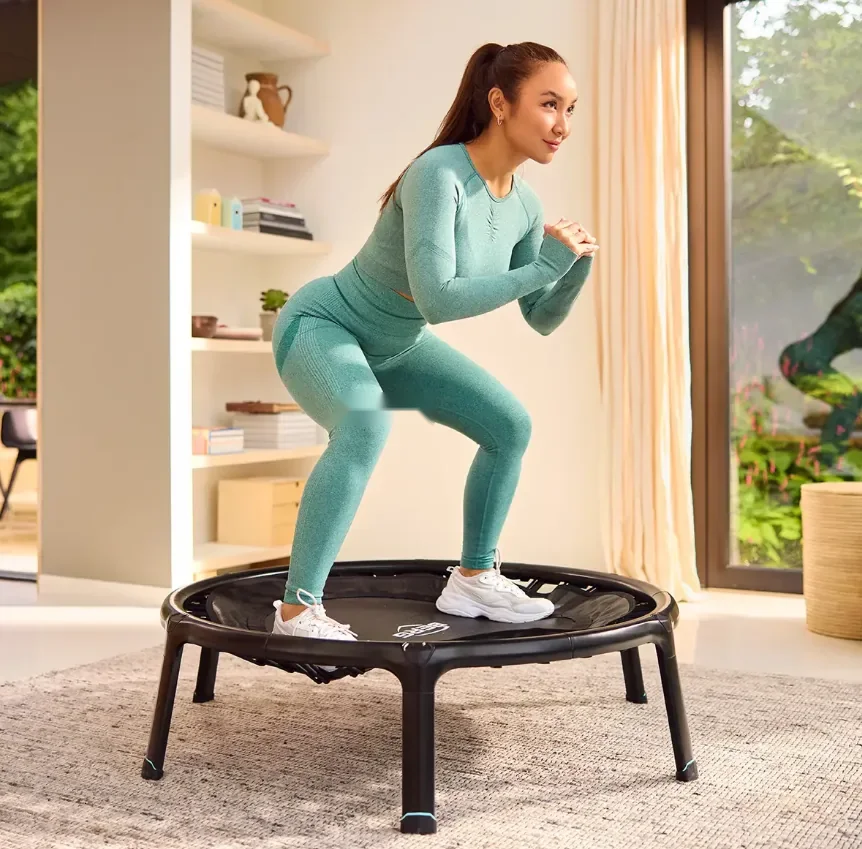
"Lymphatic drainage" is probably the most repeated claim made for rebounders. It appears on product pages, in videos and in magazine articles, often with the words "detox" and "immunity" close behind. We sell rebounders, so it would suit us if it were true. We went looking for the research and did not find any.
What the lymphatic system does
In brief, the lymphatic system is a network of vessels and nodes that collects fluid from your tissues and returns it to the bloodstream. The fluid is called lymph.
How does lymph move? The Office for Science and Society at McGill University, which reviewed the trampoline claim in 2023, describes it this way: lymph is moved along by valves in the vessels, by breathing and by ordinary muscle action. In other words, your body does this already, all day, without special equipment.
Does movement help?
In general, yes, in the sense that muscle contraction and breathing are part of how lymph returns. Walking to the shop involves both. So does gardening, swimming or bouncing on a rebounder.
What nobody has shown is that rebounding does this any better than a walk. That is the gap between the claim and the evidence.
What we found when we looked for studies
We found no study that measured lymph flow, "toxin" clearance or immune function during or after rebounding in healthy people. Here is where the common versions of the claim lead.
| The claim | What is behind it |
|---|---|
| Rebounding drains or stimulates the lymphatic system | No study measuring lymph flow on a rebounder. A well-known health site that says it "may stimulate" the system cites a page of a book, not a study. |
| It flushes toxins, or "detoxes" you | No study. McGill's review calls the detox claim unscientific. |
| It boosts immunity | No study of immune function and rebounding that we could find. |
| NASA proved it | The 1980 NASA-funded paper measured acceleration, oxygen use and heart rate in eight young men. It did not measure lymph. |
| It increases lymph flow many times over | We found no source for any such figure. |
McGill's review traces the idea not to a research group but to a self-described "certified lymphologist". The only study it could find was a 2018 pilot in Montreal involving seven women with lymphoedema in the legs, which it judged too small to draw conclusions from. We have not read that pilot ourselves, so we do not lean on it either way.
For those reasons we do not describe our rebounders as lymphatic, detoxifying or immune-boosting, here or anywhere else on this site.
If you have lymphoedema
Lymphoedema is a medical condition and it is managed by specialists. Nothing on this page is advice about it.
- Follow the plan from your lymphoedema clinic or physiotherapist.
- Ask them before you add any new exercise, including a rebounder.
- Do not use a rebounder to treat swelling yourself, whatever a video or product page suggests.
We are a retailer, not medical professionals. If your clinic or physiotherapist has suggested a rebounder and you have questions about the equipment itself, we are glad to answer those.
What rebounding is reasonably good for
Leave the lymph claim aside and there is still a fair case for a rebounder, with the limits stated.
- Cardio. In a small ACE-sponsored study of 24 active young adults, a 19-minute choreographed mini-trampoline workout averaged about 79% of maximum heart rate, yet participants rated it as only light to moderate effort. That was a structured routine done by fit students, not a gentle bounce.
- Balance and leg strength. Two small studies of supervised mini-trampoline programmes in older adults, lasting 12 to 14 weeks, found improvements in balance tests and leg strength. Neither counted real-world falls.
- Convenience. Irish guidelines recommend at least 150 minutes of moderate activity a week, plus muscle-strengthening on two or more days. A rebounder in the house is one easy way to add to those minutes when the weather or the clock is against you. It does not cover the guidelines on its own.
Like any exercise, bouncing gets your muscles and circulation working. That is a good enough reason to do it, and it does not need a bigger claim attached.
The full picture, with every source, is on our health benefits page. If you want to try it, start with the beginner exercises, or read what the "NASA study" measured.
This is general information, not medical advice. If you are pregnant or recently gave birth, have osteoporosis or a previous spinal fracture, a heart condition, pelvic floor symptoms, a balance disorder, a recent operation or injury, or have not exercised in a long time, talk to your GP or a chartered physiotherapist before you start.